Karunkuruvai Rice Online | Benefits, Uses & Cooking Guide
Karunkuruvai Rice: Benefits, Uses, Nutrition & How to Cook This Traditional Rice
Karunkuruvai rice is a traditional rice variety associated with Tamil Nadu and known for its naturally dark colour, distinctive character, and connection to South Indian food traditions. It is an interesting choice for people who want to explore traditional rice varieties beyond commonly available polished white rice.
If you're searching for Karunkuruvai rice online, this guide covers everything from its traditional uses and nutritional characteristics to cooking methods, recipes, and frequently asked questions.
At Marabuchuvai
What Is Karunkuruvai Rice?
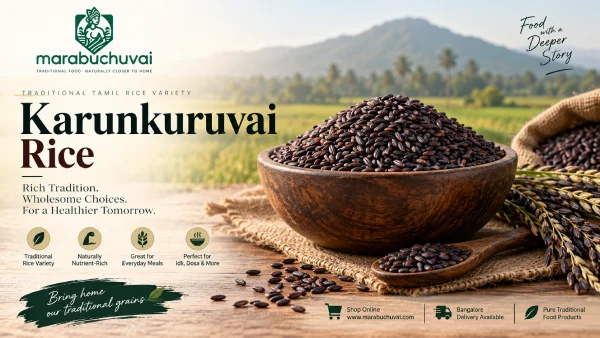
Karunkuruvai is a traditional rice variety associated with Tamil Nadu. The grain has a naturally dark or deep-coloured appearance and a distinctive earthy character.
Its colour comes from naturally occurring pigments found in the outer layers of the grain. The final colour, texture, and cooking time can vary depending on cultivation, milling, and processing.
Karunkuruvai rice can be used in a variety of traditional South Indian preparations, including:
-
Idli
-
Dosa
-
Pongal
-
Kanji
-
Traditional rice meals
-
Mixed-rice preparations
For anyone interested in traditional Tamil Nadu rice varieties, Karunkuruvai offers a different taste, texture, and appearance from everyday polished rice.
Why Choose Traditional Karunkuruvai Rice?
Traditional rice varieties are valued for their diversity, culinary character, and connection to regional food traditions.
Karunkuruvai's naturally pigmented outer layers contain plant compounds such as polyphenols. However, the exact nutritional composition depends on the variety, cultivation conditions, and level of milling.
Rather than treating Karunkuruvai as a medicinal food, it is more accurate to consider it a traditional whole-food choice that can be part of a varied and balanced diet.
Naturally Pigmented Grain
Karunkuruvai has a characteristic dark colour that makes it visually different from polished white rice. The colour comes from naturally occurring pigments in the grain.
A Traditional Rice Choice
Karunkuruvai has been associated with traditional South Indian food practices and can be used in both everyday meals and traditional recipes.
Contains Dietary Fiber
Rice that retains more of its outer layers can contain more dietary fiber than highly polished rice. The actual amount depends on how the rice is processed.
Distinctive Taste and Texture
Depending on the milling method, Karunkuruvai can have an earthy flavour and firmer texture compared with polished white rice.
Karunkuruvai Rice Nutrition
The nutritional composition of Karunkuruvai rice can vary depending on cultivation, milling, and processing.
For an ecommerce product, exact nutrition values should come from the actual product's laboratory analysis or verified nutrition information, rather than using generic numbers from another source.
Karunkuruvai can provide:
| Nutrient / Component | General Information |
| Carbohydrates | Provides carbohydrates as a source of dietary energy |
| Protein | Contains naturally occurring plant protein |
| Dietary Fiber | May be higher when more of the outer grain layers are retained |
| Minerals | Naturally occurring minerals vary according to the grain and processing |
| Plant Compounds | Pigmented rice varieties contain naturally occurring antioxidant compounds |
This is why it is better to publish your Marabuchuvai laboratory-tested nutrition values if you have them, rather than claiming fixed values for every Karunkuruvai rice product.
Karunkuruvai Rice vs Regular White Rice
The main difference between Karunkuruvai and polished white rice is related to variety and processing.
Highly polished white rice has much of its outer layers removed during milling. Traditional or less-polished rice may retain more of those layers.
| Feature | Karunkuruvai Rice | Polished White Rice |
| Appearance | Naturally dark/pigmented | Usually white |
| Flavour | Earthy and distinctive | Mild and neutral |
| Processing | Varies by milling method | Generally more heavily polished |
| Traditional Uses | Idli, dosa, kanji, pongal, and meals | Everyday rice, pulao, biryani, and more |
| Natural Pigments | Present in pigmented varieties | Much lower after polishing |
| Cooking | May require longer cooking or soaking | Generally quicker to cook |
This doesn't mean one rice is universally suitable for everyone. Your choice should depend on your food preferences, cooking method, and overall diet.
Traditional Uses of Karunkuruvai Rice
Karunkuruvai is versatile enough to be used in several South Indian recipes.
Karunkuruvai Idli
Karunkuruvai rice can be combined with urad dal to prepare fermented idli batter. The resulting idlis can have a distinctive colour and flavour.
Karunkuruvai Dosa
Fermented Karunkuruvai batter can be used to make dosa. Adjusting the batter consistency can help you achieve either softer or crispier dosas.
Karunkuruvai Kanji
Cook the rice until soft and prepare a comforting rice porridge. It can be paired with traditional accompaniments such as pickle or buttermilk.
Karunkuruvai Pongal
Use Karunkuruvai along with moong dal and traditional seasoning to create a distinctive version of pongal.
Karunkuruvai Sadam
Cooked Karunkuruvai can be served with sambar, rasam, dal, vegetables, poriyal, kuzhambu, or curd.
How to Cook Karunkuruvai Rice
Karunkuruvai can require a different cooking approach from polished white rice. The exact method depends on how the particular product has been milled.
Basic Cooking Method
-
Wash the rice thoroughly.
-
Soak the rice according to the recommended cooking method.
-
Add sufficient water.
-
Cook until the grains become tender.
-
Allow the cooked rice to rest for a few minutes.
-
Gently fluff and serve hot.
For some traditionally processed varieties, soaking for several hours or pressure cooking may produce better results.
Tip: Don't blindly use the water ratio or cooking time for regular white rice. Follow the instructions supplied with your specific Karunkuruvai rice.
Karunkuruvai Rice for Idli and Dosa
Karunkuruvai can be incorporated into traditional fermented breakfast recipes.
Basic Process
Soak → Grind → Mix → Ferment → Cook
For idli and dosa:
-
Soak Karunkuruvai rice.
-
Soak urad dal separately.
-
Grind them to the desired consistency.
-
Combine and add salt.
-
Allow the batter to ferment.
-
Steam the batter for idlis or spread it on a hot tawa for dosas.
Fermentation contributes to the characteristic flavour and texture of traditional idli and dosa.
How Does Karunkuruvai Rice Taste?
Karunkuruvai generally has a more distinctive character than highly polished white rice.
Depending on the variety and processing, you may notice:
-
Earthy flavour
-
Mild nuttiness
-
Firmer texture
-
More pronounced grain character
Its distinctive taste works particularly well with strongly flavoured South Indian dishes such as sambar, rasam, and kuzhambu.
Is Karunkuruvai Rice Gluten-Free?
Plain rice is naturally gluten-free.
Therefore, plain Karunkuruvai rice is naturally gluten-free. However, people with celiac disease or medically diagnosed gluten sensitivity should check the product's processing and packaging information to understand whether there is any risk of cross-contact with gluten-containing ingredients.
Can Karunkuruvai Rice Be Used Every Day?
It can be included as part of a varied and balanced diet.
You don't necessarily need to replace every other rice variety. Many households rotate different rice varieties depending on the recipe and meal.
For example:
-
Karunkuruvai rice + sambar + poriyal + appalam
-
Karunkuruvai rice + rasam + vegetables + curd
This makes it easy to explore different traditional rice varieties without making exaggerated health claims about any single food.
Where to Buy Karunkuruvai Rice Online?
If you're looking for Karunkuruvai rice online in Bangalore, choosing a reliable source is important. Look for clear information about the rice variety, processing, packaging, and origin.
At marabuchuvai.com
Why Explore Marabuchuvai?
-
🌾 Traditional rice varieties
-
🍚 Carefully selected food products
-
🌿 Focus on traditional food choices
-
📦 Convenient online ordering
-
📍 Bangalore delivery available
Explore Marabuchuvai's traditional rice collection and bring the taste of traditional grains to your family table.
Frequently Asked Questions About Karunkuruvai Rice
1. What is Karunkuruvai rice?
Karunkuruvai is a traditional rice variety associated with Tamil Nadu. It is known for its naturally dark or pigmented appearance and distinctive taste and texture.
2. What are the uses of Karunkuruvai rice?
Karunkuruvai can be used for traditional rice meals, idli, dosa, kanji, pongal, and other rice-based preparations.
3. Is Karunkuruvai rice good for idli and dosa?
Yes. Karunkuruvai can be used as part of idli and dosa batter along with urad dal. Proper soaking, grinding, and fermentation are important for achieving good texture.
4. Does Karunkuruvai rice need soaking?
Depending on the milling and processing method, soaking can help improve cooking and texture. Follow the cooking instructions provided for your specific product.
5. Is Karunkuruvai rice naturally gluten-free?
Plain rice is naturally gluten-free. If you have celiac disease or gluten sensitivity, check the packaging and processing information for possible cross-contact.
6. Is Karunkuruvai the same as black rice?
No. Karunkuruvai and black rice should not automatically be treated as the same variety. Karunkuruvai is a traditional rice variety associated with Tamil Nadu, while “black rice” is a broader description used for different pigmented rice varieties.
7. How does Karunkuruvai differ from polished white rice?
The varieties and processing methods are different. Karunkuruvai has a naturally pigmented appearance and distinctive character, while polished white rice generally has more of its outer grain layers removed.
8. Can I eat Karunkuruvai rice with sambar and rasam?
Absolutely. Cooked Karunkuruvai pairs well with traditional South Indian dishes such as sambar, rasam, kuzhambu, poriyal, dal, and curd.
9. Where can I buy Karunkuruvai rice online?
You can find Karunkuruvai rice online through Marabuchuvai
Bring Traditional Rice Back to Your Kitchen
Traditional rice varieties are part of India's diverse food heritage. Karunkuruvai offers an opportunity to explore that diversity through everyday dishes—from a simple bowl of rice and sambar to homemade idli, dosa, and kanji.
If you're searching for Karunkuruvai rice online, explore the traditional rice collection at marabuchuvai.com
Marabuchuvai — Traditional Food. Naturally Closer to Home.
Secondary Keywords:
-
Karunkuruvai rice
-
Buy Karunkuruvai rice online
-
Karunkuruvai rice benefits
-
Karunkuruvai rice uses
-
Karunkuruvai rice nutrition
-
Traditional rice varieties
-
Tamil Nadu traditional rice
-
Traditional rice online
-
Karunkuruvai rice Bangalore
-
Traditional rice Bangalore
-
Buy traditional rice in Bangalore
-
Karunkuruvai rice for idli
-
Karunkuruvai rice for dosa
-
Karunkuruvai rice cooking method
-
Traditional Tamil rice varieties
-
Organic traditional rice